Fighting for life

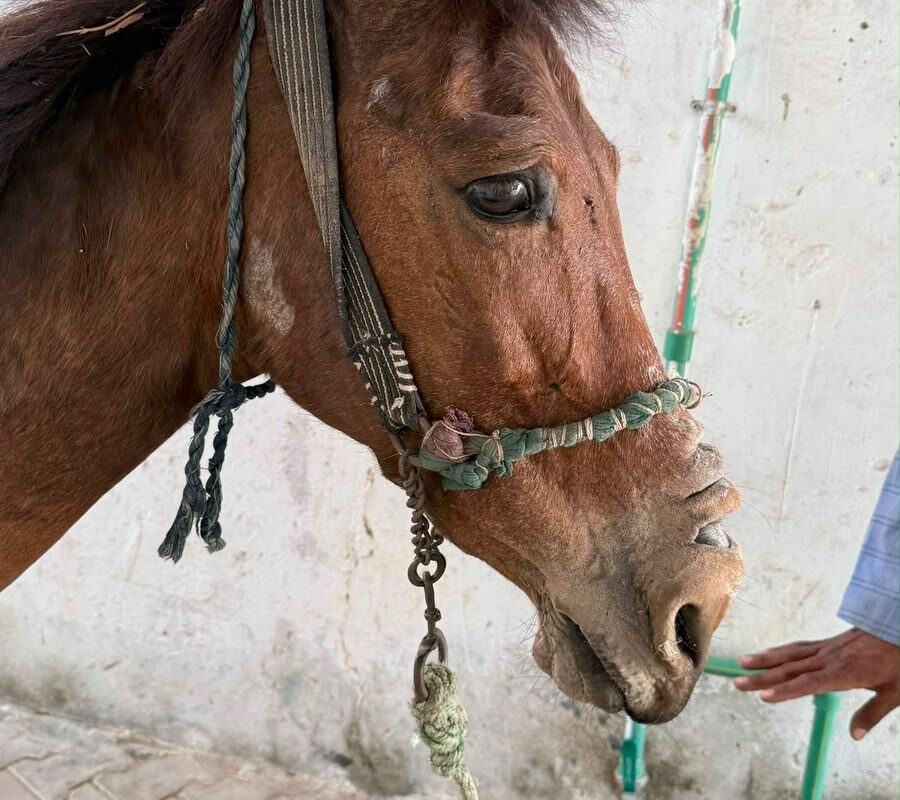
❗️Nora. worked for ten days on two broken legs.❗️
Nora did not fall at the moment she broke both front legs. She only fell ten days later, because all that time she was still forced to work.
When we first heard her story, our thoughts went back to all those Egyptian roads we had traveled over the past years. To carts filled far beyond measure. To animals going uphill and downhill with a load that is often difficult to control even when their legs are healthy. To harnesses cutting into the body, to whips raised when the animal slows down, and to people who can walk by because such a sight has become part of their daily lives. In Egypt, the suffering of working animals is not always hidden behind closed doors. It often happens in the middle of the street, in full sun, among cars, tourists, and people busy with their own day.
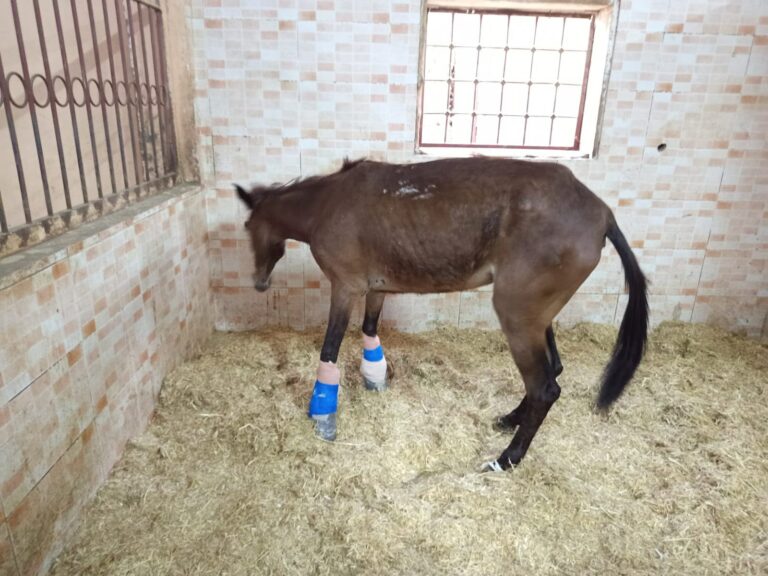
Nora is ten years old. She is a mule. She was descending a hill, pulling an overloaded cart, when the accident happened. She broke both front legs at the P1 level. Two legs, on which a significant part of her body weight rested. Two legs that should have been immediately immobilized and given specialized care. Two legs on which she should not have taken a single unnecessary step.
But the cart still had to go.
This is what is most difficult for us to understand. Not the moment of the accident itself, because accidents can happen anywhere. The most difficult thing is what happened afterwards. Someone saw that Nora was suffering. Someone saw that something very wrong was happening with her legs. Someone must have noticed that each subsequent step looked different than before. And yet, her harness was not removed. She was not allowed to rest. The help she deserved was not brought.
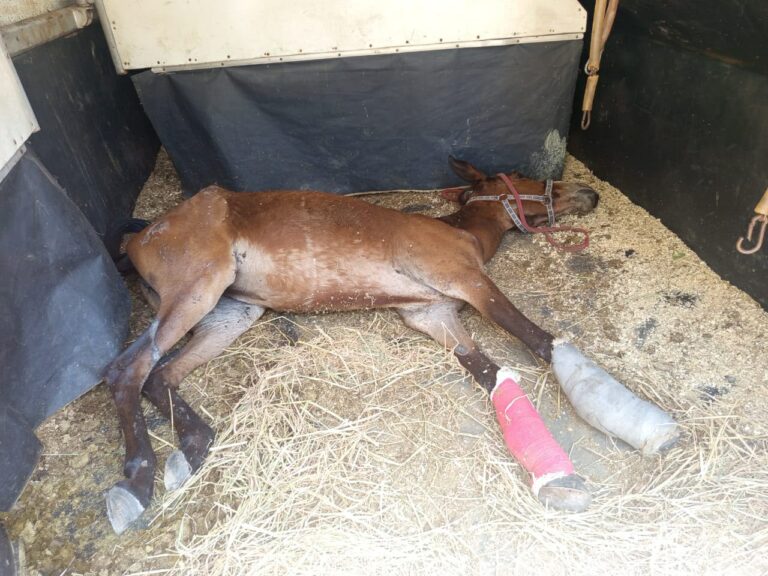
For ten consecutive days, she was forced to work.
We sometimes try to imagine one such day. The morning when Nora had to get up again. The weight of her own body resting on broken bones. The harness being put on. The cart that was behind her again. The first step, then the second and subsequent ones, although each of them must have meant pain that we cannot truly feel or describe. And then the evening and the knowledge that everything would start anew the next day.
But it was not one day.
There were ten of them.
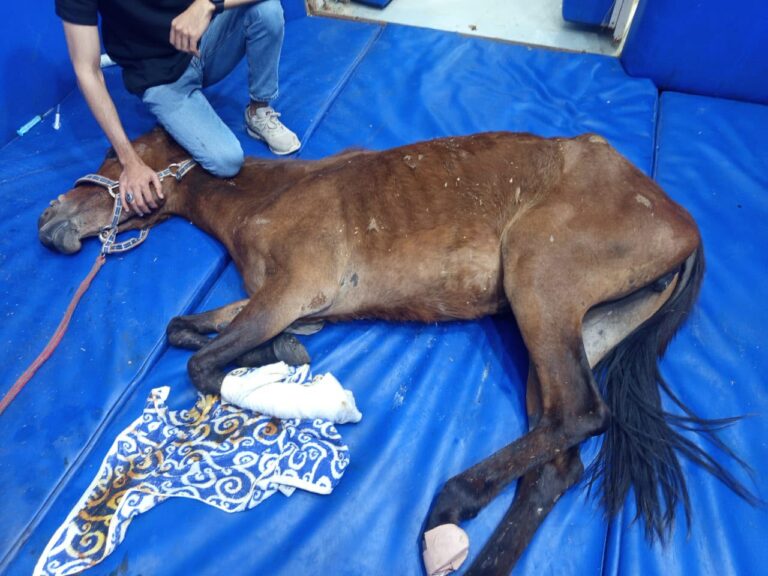
Ten days during which Nora still had to pull, still had to earn, and still had to be useful. Ten days when broken bones worked under the weight of her body and the overloaded cart. Ten days during which the damage could worsen with every movement. Her suffering did not stop the work. Only a complete loss of strength stopped Nora.
Finally, she fell.
We don’t know how many times she tried to stay on her feet before. We don’t know how many times her body warned her that she couldn’t go on. Working animals cannot say that the pain has crossed the limit. They cannot refuse to leave. They cannot remove their harness and walk away. Their resistance often simply looks like slowing down, stumbling, or stopping for a few seconds. And for such a stop, they often face even greater violence.
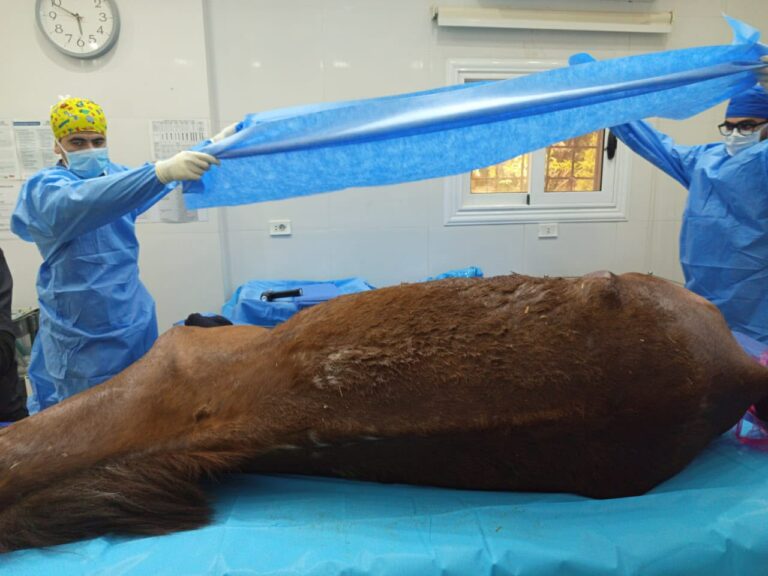
Nora worked until her body refused further obedience.
Four days after she fell, she was brought to the people we work with in Egypt. Not because the owner wanted to provide her with the best treatment. Not because after ten days he understood the immense harm done to her. Nora was brought to be bought out and euthanized.
This is where her story was supposed to end.
Because in the world of many working animals, life has value only as long as one can profit from it. As long as the animal pulls a cart, carries people, transports goods, and gets up every morning, it is needed. When it falls, it becomes a problem. A cost. A body that can no longer be used. Then suddenly there is no money for tests, for surgery, for medicine, or for long weeks of care.
This is what we encounter in Egypt time and again. With the incredible strength of animals that work beyond their capabilities, and with equally great indifference towards them when that strength runs out. Each time, one wants to believe that the next story will not be worse than the previous one. And then Nora arrives – a mule who walked on two broken legs for ten days.
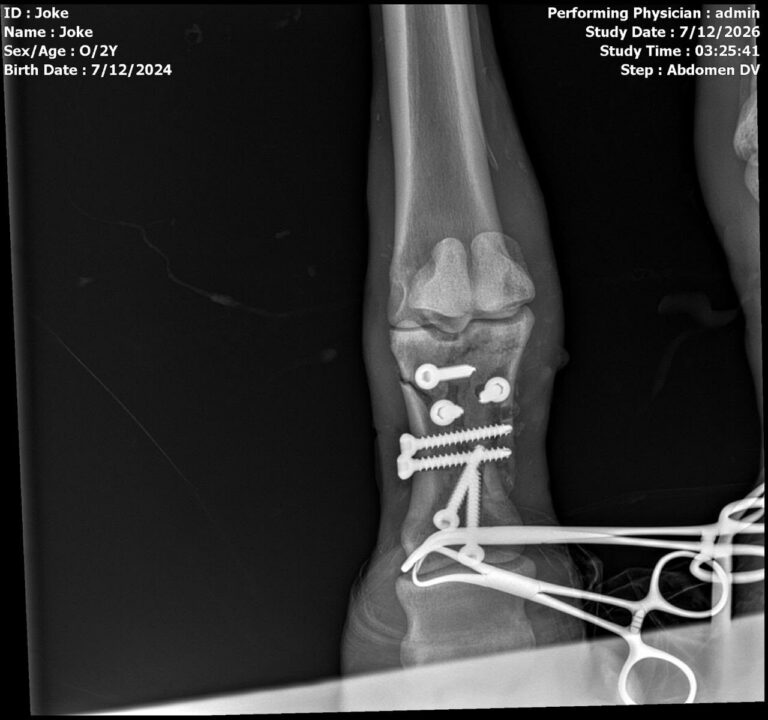
When she came under the care of our Egyptian team, her suffering could have been ended. That was, after all, the purpose for which she was brought. But the veterinarians saw Nora not as a broken tool, but as a living being who for ten days did everything that was demanded of her, even though her body was falling apart with every step.
A fight was undertaken.
Nora underwent surgery on both front legs.
Two broken legs. Two operated limbs. A huge procedure and an even greater challenge, because a horse, donkey, or mule cannot simply lie in bed and not put weight on their legs for many weeks. Every day Nora has to bear the weight of her own body. Every day her body has to cope with pain, healing, dressings, and the consequences of not receiving help for ten days. The surgery does not erase what happened to her. It is only the beginning of a journey whose end no one can guarantee today.
And that’s probably why we want to tell her story so much. We don’t want Nora to remain just another photo from Egypt that someone looks at for a few seconds and scrolls past. Behind this photo are ten years of life. There are hundreds, maybe thousands of kilometers traveled. There are carts she pulled, loads she carried, and people she worked for. And then there are those ten days when no one stopped for her.
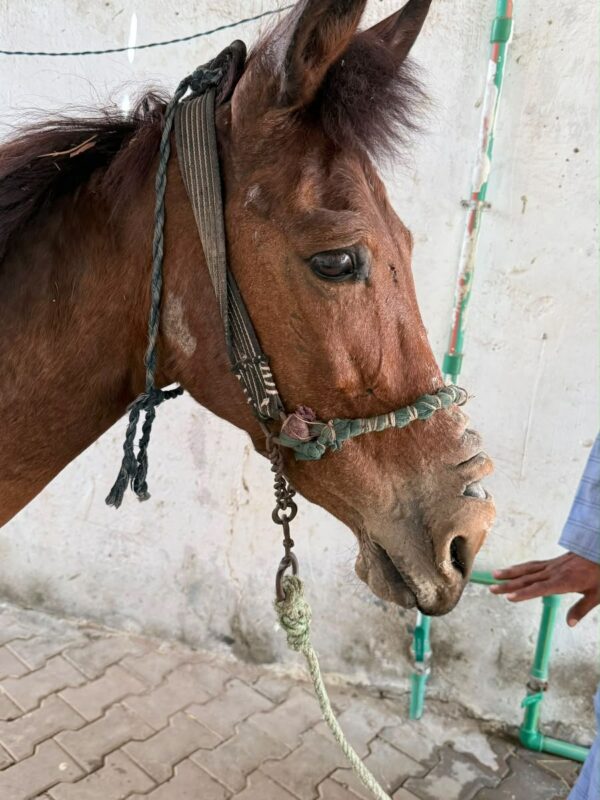
Today, we must stop.
We cannot turn back the overloaded cart. We cannot take away the pain that accompanied her during those days. We cannot make help come immediately after the accident. However, we can do everything so that Nora never again has to prove her worth through work. We can help pay for operations, treatment, medications, dressings, and the long-term care that awaits her now. We can show her story to people who do not agree with a world where an animal has to work on broken legs until it finally collapses to the ground.
Please, help us fight for Nora. Share her story and support her treatment. For ten days, no one stopped the cart for her. Today, we cannot pass by her in the same way.
Fundraiser end date
December 13, 2026